
Can Cats Have Mental Disabilities?

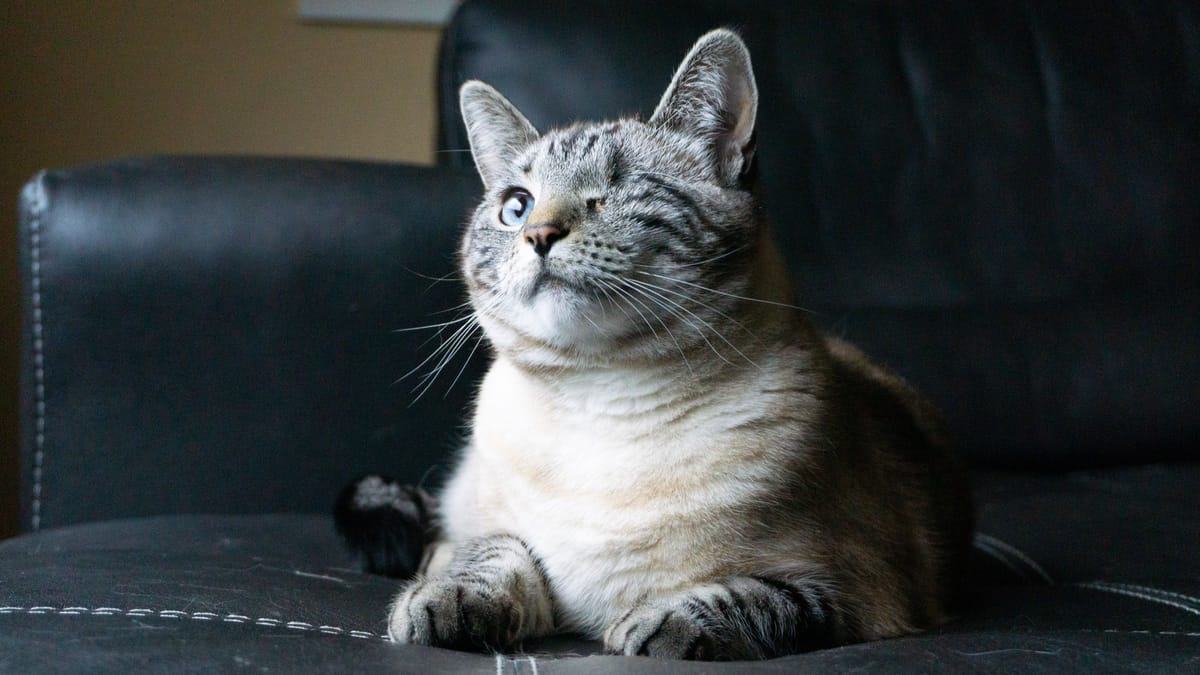
People usually ask this in a worried moment. A kitten walks like the floor keeps moving. An old cat cries at three in the morning and stares at the wall.
So, can cats have mental disabilities? The answer comes in two parts. Cats cannot be given human diagnoses, because labels like autism and ADHD describe human brains and human development. But a cat can be born with a brain that developed differently, and an older cat can lose cognitive ground as the years add up. Those conditions are real. They carry their own names, and only a veterinarian can say which one, if any, fits your cat.
This article is for awareness only and isn't a substitute for professional veterinary advice. If your cat shows any worrying symptoms, contact your veterinarian promptly.
Can cats have mental disabilities in the human sense?
No, and the reason is simpler than most people expect. Autism, ADHD and Down syndrome are diagnoses built from human development and, in the case of Down syndrome, human genetics. Veterinary medicine has no feline version of them, and a vet will not diagnose your cat with any of them.
This trips people up because cat behaviour is easy to misread through a human lens. A cat who dislikes change, avoids eye contact or guards a favourite chair is usually just being a cat. Learning how cats communicate does more for most owners than borrowing a human label. When a cat's behaviour really does point to the brain, the explanation almost always has a name of its own.
Born different: when a kitten's brain develops another way
Some kittens start life with a nervous system that formed differently in the womb. The MSD Veterinary Manual notes that these differences can be inherited or caused by conditions during pregnancy, such as infection or poor nutrition, and some stay hidden until the kitten begins to walk. Normal kitten development stages are the backdrop here, because a developmental difference often shows up as a milestone that looks unusual.
The best known example is cerebellar hypoplasia. The cerebellum is the part of the brain that manages balance, coordination and fine movement. When it fails to develop fully before birth, the kitten grows into a wobbly cat. VCA Animal Hospitals explains that the most common cause is the mother catching feline panleukopenia virus during pregnancy. Affected kittens walk with a jerky, swaying gait, sometimes with a high goose step and a tremor in the head that gets stronger when the kitten concentrates on food or a toy.
Two facts about this condition matter to owners. It is not painful, and it does not get worse. The tremor a kitten has at eight weeks is roughly the tremor the adult cat keeps, and VCA notes that these cats can live a normal lifespan.
They also learn their own way of moving. Some need raised dishes so eating takes less balancing. Most should live indoors, where a fall or a fast dog cannot turn a wobble into an injury.
Other kittens are born with differences you notice through the senses rather than the legs. Congenital deafness, for instance, appears most often in white cats with blue eyes. Some kittens are born with a vestibular difference, which affects balance and posture. The Manual notes that these cats can learn to compensate over time. None of this makes a cat less of a cat. It changes what the home around the cat needs to do.
The senior change vets call cognitive dysfunction
The second road to a different brain arrives late in life. The Cornell Feline Health Center describes cognitive dysfunction as an age related disorder whose signs usually become clear in cats aged ten or older. International Cat Care explains it as a decline in learning, memory, attention and awareness, driven by changes in the ageing brain itself.
Owners describe a recognisable pattern. A senior cat gets stuck in a corner of a room she has known for years. She forgets where the litter tray is, or that she was fed twenty minutes ago.
Sleep flips around, so the cat paces and cries at night and dozes through the day. Some cats grow clingier. Others withdraw, groom less and seem less interested in food. If you are unsure which life stage your cat has reached, the cat age calculator puts human years and cat years side by side.
There is a reassuring line in the International Cat Care guidance. Cognitive dysfunction does not have to shorten a cat's life, provided her quality of life stays good. The day to day support below is where owners make the difference.
Why you cannot work this out at home
Search results for this topic are full of checklists that invite you to score your cat and land on an answer. Please be careful with them. The problem is overlap.
Cornell points out that the same behaviour changes can come from arthritis pain, kidney disease or an overactive thyroid. International Cat Care adds high blood pressure and brain tumours to that list, and notes that high blood pressure can even damage a cat's eyes and leave her anxious and confused.
So the answer to "how can I tell if my cat is mentally disabled" is that you cannot, not from the sofa. A painful joint, a thyroid problem and a changing brain can all produce a cat who cries at night and misses the litter tray. Sorting one from the other takes an examination and test results. That answer protects your cat from the worst outcome here: a treatable illness mistaken for a permanent condition.
What a vet actually does with a cat like yours
Knowing what happens at the clinic makes the appointment easier to book. International Cat Care describes the usual shape of it. The vet takes a detailed history from you, examines your cat, and will likely run blood tests, a urine test, or both. The point of those tests is to rule out the lookalike conditions first. Cognitive dysfunction, for example, is only diagnosed once the other explanations have been excluded.
Your side of that visit is mostly storytelling. When did the change start? Is it getting worse, or holding steady?
Short notes on your phone help, and a brief video of the behaviour at home can show the vet something your cat will never perform in an exam room. Our free Cat Change Tracker turns those phone notes into a dated timeline you can print and take along. The vet visit prep checklist on this site walks through what to bring and what to ask. After the assessment, the vet can talk through what support fits your individual cat. That conversation is where management plans belong, not in a comment thread.
📝 Cat Change Tracker
Log what you notice at home and turn it into a dated timeline for your vet.
Your change log
Nothing logged yet — the first note is the start of the timeline.
When you spot a change — however small — add it above. Small and dated beats big and vague, every time.
| First noticed | Area | What changed | Arrived | How often | Notes |
|---|
Your timeline will appear here as you add entries.
Questions worth asking your vet
- Could this change have a medical cause we should rule out?
- Which examinations or tests, if any, would help work that out?
- What changes at home would support my cat while we figure this out?
- What should I watch for that would mean coming back sooner?
- How soon should we check in again — and should I keep logging until then?
A log, not a diagnosis — only a veterinarian can say what a change means. Sudden changes: book the vet first, log it later. Your log is stored only in your browser; nothing is uploaded.
Home is where most of the help happens
Whatever name the vet does or does not give your cat, the daily work lands at home, and most of it is ordinary kindness arranged with a bit of thought.
Keep the map of the house steady. A cat who navigates partly by memory, whether because of a wobble, failing sight or a fading one, suffers when the furniture moves. Our blind cat home setup checklist was written for blind cats, and nearly all of it applies to any cat whose brain processes the house differently. Run the cat home safety audit once, and you will catch the hazards that matter most: open stairwells and high perches with hard landings.
Put the essentials within easy reach. International Cat Care suggests food, water and litter trays on every floor a senior cat uses, with large trays that have a low side to step over. Ramps and steps turn a favourite windowsill back into an achievable trip, and the senior cat ramp planner helps you size them.
A night light in the hallway can settle a cat who gets disoriented after dark. Raise the food bowls a little for a wobbly cat, and put a mat with grip under them.
Routine does quiet work, too. Feed at the same times. Keep play gentle and short, and let the cat end it.
Puzzle feeders and other small challenges give an ageing brain something to do, and International Cat Care notes that environmental enrichment is linked to better cognitive function in cats. The cat enrichment plan generator builds a plan around your cat's age and energy. Introduce every change one at a time and slowly. A cat who struggles with change will not thank you for a full home makeover in a single weekend.
Start with the appointment
Maybe your cat was born wobbly and has been joyfully unsteady for years. Maybe your sixteen year old has started singing to the hallway at night. Either way, the path runs through the same door.
You do not need the right label before you go, and you do not need to apologise for asking the question out loud. Noticing that your cat's brain seems to work differently is a good and loving observation. Acting on it means one thing. If your cat's behaviour, balance or awareness has changed, or you simply want to know what you are living with, talk to your veterinarian.
This article is for awareness only and isn't a substitute for professional veterinary advice. If your cat shows any worrying symptoms, contact your veterinarian promptly.