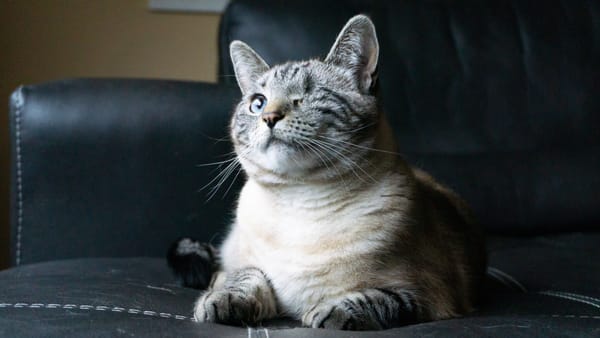
Devon Rex, the Pixie Cat That Moves Into Your Lap

The Devon Rex looks like a pixie that escaped from a storybook and decided your couch was nicer. Oversized ears. Wide cheekbones. A short, wavy coat that feels like warm suede. This cat turns heads everywhere it can be photographed, which is everywhere, because the Devon Rex poses.
But this breed is more than a face. It is a full-time roommate with opinions, a shoulder-perching habit, and a play drive that does not come with an off switch. If you have ever wanted a dog in a cat suit, the Devon Rex would like a word.
This article is for awareness only and isn't a substitute for professional veterinary advice. If your cat shows any worrying symptoms, contact your veterinarian promptly.
What Is a Devon Rex?
The Devon Rex is a curly-coated breed that began with a single kitten. In 1959, a curly-coated kitten turned up in a litter born in a garden in Buckfastleigh, Devon, England. Beryl Cox took him in and named him Kirlee, and he became the founding father of the breed. Kirlee is also a superb cat name.
Early breeders assumed the Devon shared its curl gene with the famous Cornish Rex. They were wrong. Bred together, the two produced straight-coated kittens, which proved the Devon curls came from a completely different gene. We now know the Devon's waves come from a change in a gene called KRT71. The breed won recognition from the Governing Council of the Cat Fancy in 1967, and from the Cat Fanciers' Association in 1979.
Grown Devons are small but solid. Adults usually weigh 6 to 9 pounds, stand about 10 to 12 inches tall, and vet guides generally give a lifespan of 9 to 15 years. Males run a little larger than females.
The Pixie Look
Start with the ears. Devon Rex ears are huge, set wide and low on the head like satellite dishes tuned to the sound of a treat bag. Then come the cheekbones, wide and prominent, giving the face a triangular, elfin shape. The eyes are large and oval. The whole head says mischievous forest creature, and the body underneath says athlete.
The coat is the headline act. Devon Rex fur is short and wavy, rippling in soft rows, and it feels like suede or velvet. Unlike the Cornish Rex, the Devon keeps a few sparse, short guard hairs, which gives its waves a looser, more open look. The whiskers and eyebrows curl too, and they snap off into short stubs easily, so a Devon with stubby whiskers is not a sick cat, just a Devon. Kittens can look nearly bare before their ripples grow in.
Under the coat is a slender, muscular frame. Long legs. A long, thin tail. Thin patches on the neck and belly are normal for the breed, not a sign that something is wrong. Devons come in every color and pattern the cat world offers, so you can pick your pixie in any shade you like. Coat colour is genetics doing quiet maths, and our kitten coat colour predictor plays out the likely combinations from the parents.
Devon Rex Temperament: Mischief with a Motor
Forget the aloof-cat stereotype. The Devon Rex never received that memo. Devons are people cats. They follow their humans room to room, supervise meals, attend work meetings, and treat closed doors as a personal insult.
The signature move is the shoulder perch. A Devon Rex will climb you like a tree and settle across your shoulders like a furry scarf that purrs. Owners take phone calls with a six-pound supervisor breathing on their neck.
Mischief is the operating system. Devons open cabinets, relocate small objects, and invent games with rules only they understand. Give one a bottle cap and a hallway and it will learn that batting it makes a sound you find funny. Now bottle caps are currency.
They are talkers too. Not the running commentary of a Siamese cat, but a steady stream of chirps, trills, and questioning mrrows that all mean one thing: what are we doing now? They are quick learners too, and many Devons learn their name and pick up simple tricks.
Unlike a Maine Coon that naps like a viking on a rug, a Devon naps on you. And where a Ragdoll cat goes limp with affection, a Devon goes launch. Devons stay playful far into adulthood. A five-year-old Devon still greets a new toy like a kid on a holiday morning.
Play Needs: This Cat Runs a Tight Ship
A bored Devon Rex is a renovation project with whiskers. This breed needs daily interactive play: wand toys, feather teasers, crinkly tunnels, puzzle feeders, and a tall cat tree for climbing. Ten to fifteen minutes, a couple of times a day, keeps the pixie civilized and your curtains intact.
Devons are natural fetch players. Throw a soft ball or a crumpled paper wad and many Devons will bring it back, drop it at your feet, and stare at you until you throw it again. You have been drafted into a sport you did not sign up for.
Puzzle toys that dispense treats engage the brain and the legendary appetite, and the Devon's stamina will feel familiar if high-energy athletes like the Bengal cat appeal to you. Rotate the toys weekly, because a Devon figures out a static lineup fast.
Grooming a Devon Rex: Handle with Care
Good news: the short coat is wash-and-wear. A weekly gentle brush, or a rubdown with a soft cloth, keeps it tidy. Skip slicker brushes and stiff combs. They tear the fine hairs. Devons shed less visibly than heavy-coated breeds, which is a small mercy for your dark sweaters.
The coat is delicate, so gentleness rules. Rough handling can break the fine hairs. Grooming time doubles as bonding time, and a Devon will happily supervise your technique from your lap.
Baths are occasional, not routine, only when the coat actually needs one. With so few guard hairs, skin oils have nowhere to go, so some Devons turn greasy between baths. A 2008 study found yeast living on the skin of nine in ten healthy Devons. If the coat smells musty or the skin looks red or irritated, that is a vet visit, not a bath question. The big ears can collect wax, so a gentle wipe during cuddle time helps.
Devon Rex Health: What to Know Before You Commit
Devons are generally healthy cats. Like most pedigree breeds, though, they carry a short list of inherited conditions worth knowing about before you commit. The best known is an inherited muscle weakness called congenital myasthenic syndrome, or Devon Rex myopathy. It shows up in young kittens, and a DNA test exists, so a responsible breeder can show you the parents' results. The heart condition hypertrophic cardiomyopathy and kneecap trouble called patellar luxation also turn up in the breed, and breed bodies recommend screening breeding cats.
Blood type is a Devon quirk worth knowing. About a third of Devons carry type B blood, which matters for transfusions and in breeding, where a mismatch between mother and kittens can be dangerous. Ask your vet about your cat's blood type and keep it on record. A 2024 study found one in ten white Devons was born deaf, so ask whether a white kitten's hearing has been tested.
The Devon Rex is not hypoallergenic. It sheds less than most cats, and some people with allergies find it easier to live with, but the allergy trigger lives in skin and saliva as well as fur, so a Devon can still set allergies off. Spend time with the breed first if allergies run in your household.
Living with a Devon Rex
Cold weather is the Devon's kryptonite. That thin, wavy coat is adorable and roughly as insulating as a rumor. In chilly homes, many Devon owners dress their cats in soft sweaters. Devons often feel warmer to the touch than other cats. That is not a fever. Their thin coat just lets their normal body heat through.
Devons are heat-seekers by nature. Expect your cat to claim the sunny window, the warm laptop, and the exact center of your freshly folded laundry. A heated bed or a sunny perch becomes a timeshare the cat owns outright.
Kids and Devons are a great match, within reason. These cats are sturdy enough for supervised play with gentle children and social enough to join the game instead of hiding from it. Teach small kids the two house rules: gentle hands, and the cat leaves when the cat decides.
Devons love to eat and will audition for the role of starving waif at every meal. They burn energy fast, so they need more calories for their size, but that is not a license for free feeding. Measure meals and go easy on treats. If you are unsure about portions, talk to your veterinarian.
Is the Devon Rex Right for You?
- You want a shadow. A Devon follows you everywhere and considers alone time a rounding error.
- You can laugh at chaos. Curtains climbed. Papers relocated. A cat in your grocery bag.
- You play daily. Wand toys and fetch are part of the routine, not a special occasion.
- You keep the house warm. Sweaters, sunny windows, cozy beds, the thin coat needs backup in cold months.
- You are home enough. Devons crave company, and long solo days go better with a feline coworker.
- You want a first cat. Devons are easy to groom, easygoing, and forgiving of beginners.
Reconsider if you want an independent cat, a quiet cat, or a cat that stays off the counter. This breed considers off a suggestion, not a rule. If you wanted a cat that keeps to itself, the British Shorthair is taking applications.
If you are planning your timing, our guide to adopting a cat in January covers why the quiet winter months can be a good season to bring one home.
If you have ever done the old times-seven maths on your Devon Rex, our cat age calculator follows the way cats actually age.
The Verdict: A Pixie Worth the Chaos
The Devon Rex is the cat for people who believe pets should be entertainment, not furniture. It is funny, athletic, and affectionate to a comedic degree. Life with a Devon is louder, warmer, and more supervised than life without one.
Bring home a pixie and you get a comedian, a personal trainer, and a heated scarf that purrs. Keep the sweaters handy and the wand toys charged. The Devon Rex does not do boring.
For anything health-adjacent — grooming routines, ear care, feeding — talk to your veterinarian.
If your shortlist is down to the Devon Rex versus the Cornish Rex, run both through our breed comparison tool.