Your Siamese Will Talk Back and Follow You Everywhere

The Siamese cat is the feline equivalent of that one friend who texts in all caps. It has opinions. It will share them. And it will follow you from room to room to make sure you heard them.
This is not a cat for people who like their pets quiet and decorative. The Siamese is loud, social, and deeply attached to its humans — charming or a dealbreaker, depending on your tolerance for being supervised.
In this profile: the Siamese personality, those famous blue eyes and color points, grooming, play needs, and the kind of home they thrive in.
This article is for awareness only and isn't a substitute for professional veterinary advice. If your cat shows any worrying symptoms, contact your veterinarian promptly.
The Siamese Cat Temperament: Drama, Cuddles, Repeat
Spend five minutes with a Siamese and you'll understand the drama-queen reputation: dinner is an event, you sitting down is an event, a sunbeam moving two inches is an event. You will hear about it.
But behind the theatrics is one of the most affectionate breeds in the cat world. Siamese cats bond hard: expect a shadow, a lap warmer, and occasionally a living scarf. Like the sphynx cat, they crave warmth and close contact.
They are also famously people-picky: your Siamese will adore its inner circle and view strangers with polite suspicion. Give newcomers a week.
If you love the devotion but need the volume turned down, the ragdoll cat offers a similar cuddle-first personality with far less commentary.
That Voice: Why Siamese Cats Talk So Much
Let's address the elephant in the room — or rather, the opera singer. The Siamese meow is loud, raspy, and weirdly insistent, a cross between a baby's cry and a tiny lawyer making demands — hence "Meezers."
Here's the thing: they're not just making noise. Siamese cats genuinely hold conversations — talk to them and most will answer back. The Cat Fanciers' Association puts it plainly: no other breed matches the Siamese at communicating with humans. Their vocabulary runs from chirps and trills to full yowls, and owners quickly learn a dinner demand from a hello.
This is the single biggest reason people either adore or regret getting a Siamese. Work from home on calls all day and your coworkers will meet your cat — their only real rivals in the chatty department are the bengal cat.
Fair warning: a Siamese left alone too long doesn't go quiet — it gets louder. And a sudden change in your Siamese's voice or habits is worth a vet visit: a cat that goes quiet, or starts yowling at odd hours, is telling you something.
Looks: A Sculpture That Judges You
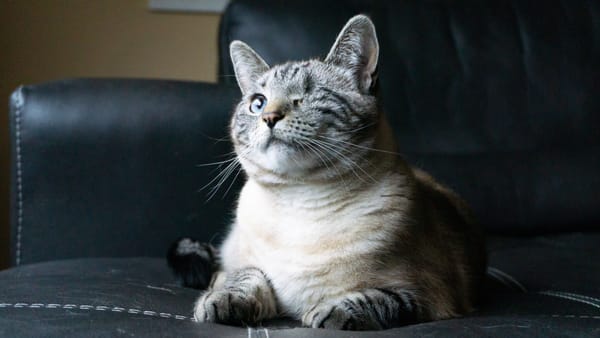
The Siamese is one of the most recognizable cats on the planet, and it knows it. Long, sleek, muscular body — males usually run 10 to 15 pounds, females 8 to 12 — wedge-shaped head, enormous ears, and those eyes: a deep, vivid blue that stares straight through your excuses.
Then there are the color points — the darker fur on a Siamese's ears, face, paws, and tail, the cooler parts of the body. The trick is a temperature-sensitive enzyme: tyrosinase only switches on in cooler skin, so the extremities go dark while the warm torso stays pale. It's a partial form of albinism, and the same quirk behind the blue eyes — which, happily, are not linked to deafness. Classic point colors are seal (dark brown), chocolate, blue (a cool gray) and lilac on a pale cream body; other registries also recognize flame, cream, lynx and tortie points.
Fun detail: Siamese kittens are born almost entirely white, the points appearing within the first week or two. The contrast can deepen as they age — the breed standard allows for darker bodies in older cats — and a chilly climate can darken the points, too.
Where a maine coon looks like a lumberjack who could chop your firewood, the Siamese looks like a fashion model who would critique your outfit. Both are gorgeous — only one will tell you about it.
Modern or Traditional: Two Looks, One Siamese Cat
Not every Siamese looks like the show-ring supermodel: the modern show type has an extreme wedge head, huge ears and a tubular body, while the traditional "applehead" type is rounder and sturdier, closer to the cats in the old Thai poems. Same personality either way.
Coat and Grooming: High Shine, Low Effort
Good news for lazy groomers: the Siamese coat is short, fine, and close-lying, which means light shedding and almost no matting. A quick weekly brush keeps it glossy — and gives you an excuse for the bonding time they'll demand.
No lion cuts, no daily detangling. If a high-maintenance coat makes you tired, the persian cat is the cautionary tale — beautiful, but a full-time commitment. The Siamese is wash-and-go fancy.
Most Siamese love being brushed: undivided attention is their favorite currency. Make it a routine and you'll have a purring puddle in your lap.
Health Awareness: What Siamese Owners Should Know
Siamese are generally healthy and long-lived — many reach their late teens, some pass 20 — but a few breed-linked issues are worth knowing.
- Eyes. An inherited eye condition, progressive retinal atrophy (PRA), can gradually affect vision — but a DNA test exists, so ask a breeder for the parents' results.
- Liver. Amyloidosis, where abnormal protein builds up in organs such as the liver, runs in some Siamese lines — ask whether it has appeared in the kitten's lines.
- Breathing. Asthma-like bronchial trouble is reported more often in Siamese than in many breeds; coughing, wheezing or open-mouth breathing mean a prompt vet call.
- Teeth. Siamese are prone to dental trouble — getting a kitten used to tooth-brushing early pays off.
Crossed eyes are part of the breed's history and now a serious show-ring fault. A Siamese bumping into things needs a vet visit.
Play and Social Needs: Never Leave a Siamese Bored (or Alone)
A bored Siamese is a destructive Siamese. Athletic, clever, and endlessly curious, this breed redecorates your home if you don't channel it. Daily play is non-negotiable: wand toys, fetch, and puzzle feeders.
They're also problem-solvers: doors, cabinets, and occasionally your laptop mid-email. Cat-proofing isn't optional; it's a lifestyle.
The bigger issue is loneliness: Siamese cats hate being alone for long stretches. Unlike the famously independent british shorthair, a solo Siamese facing a 12-hour workday will stage a one-cat protest — loudly, and possibly on your favorite chair.
Loneliness has quieter outlets, too: a bored Siamese can overgroom or chew things it shouldn't — some lines even chew wool or plastic — so keep string, rubber bands and plastic bags out of reach and mention it to your vet.
The fix is simple: companionship. Another cat, a human who works from home, or at least a serious play session before you leave and after you return. Two are genuinely easier than one.
Traveling with one? They'll supervise your packing with running commentary — our guide to holiday travel with cats covers how to keep a vocal traveler comfortable.
What Kind of Home Fits a Siamese Cat?
Good news: Siamese cats are flexible about square footage. They do beautifully in apartments as long as the vertical space is interesting — tall cat trees, window perches, shelves to patrol. They want a kingdom, not a big one.
What they need is stimulation: windows full of bird TV, rotating toys, and humans who play with them beat a big empty house. A quiet house where everyone is gone ten hours a day? Hard no.
They're indoor cats by design — short coat, social nature, poor candidates for outdoor roaming. A catio or harness walks can scratch the outdoor itch safely.
They're good family cats, too — gentle with respectful children and usually fine with cat-friendly dogs.
What Kind of Owner Should Get a Siamese Cat?
The ideal Siamese owner is home a lot, loves a running conversation, and wants a cat with dog-level devotion. If your dream pet greets you at the door and sleeps glued to your side, you're Siamese people.
Look elsewhere if you want a low-key, independent cat, travel constantly, or treasure silence. This breed will not change for you. It will, however, change you.
Budget-wise, adopting a Siamese usually runs about $75 to $200, while a pet-quality kitten from a breeder is more like $600 to $1,200. After the first year, plan on $1,000 to $2,000 a year for food, litter and routine vet care.
Siamese and Siamese mixes turn up in shelters and breed rescues more often than people expect. If you're open to adoption, our guide to adopting a cat in January walks through the process — same steps, any month.
Coat colour is genetics doing quiet maths — our kitten coat colour predictor plays out the likely combinations from the parents.
Fun Facts About the Siamese Cat
Because a cat this extra deserves some trivia:
- The Siamese is one of the oldest recognized cat breeds, from Siam — modern-day Thailand. Pointed cats appear in the Tamra Maew, Thai cat poems from as far back as the 14th century.
- Fans call them "Meezers" — for that loud, insistent meow.
- The first Siamese in America was a gift to President Hayes in 1878; the Cat Fanciers' Association recognized the breed in 1906.
- Old portraits often show Siamese with crossed eyes and kinked tails; crossed eyes are now a serious show-ring fault.
- Seal point came first — blue point followed in 1934, chocolate in 1952, lilac in 1955.
- Scooter, a Siamese from Texas, lived to 30 — a Guinness record for the oldest living cat.
- They're movie stars: Si and Am in Disney's Lady and the Tramp cemented the breed's dramatic reputation.
- Many Siamese play fetch, walk on leashes, and learn tricks.
With this much personality, your Siamese deserves a name with range — browse our funny cat names for something worthy of a drama queen.
If you have ever done the old times-seven maths, try our cat age calculator — cats age fast in the first two years, slower after that.
The Bottom Line
The Siamese cat is not a background pet. It's a co-star: loud, loving, brilliant, and completely convinced that your life is a group project.
Offer companionship, play, and a tolerance for commentary, and you'll get one of the most devoted cats in existence — plus a sleek, blue-eyed supermodel who sheds lightly.
And if all of this sounds like slightly too much cat? No shame in that. A calmer breed like the scottish fold might be more your speed — sweet and easygoing, and far less vocal.
If your shortlist is down to the Siamese versus the Balinese, run both through our breed comparison tool.