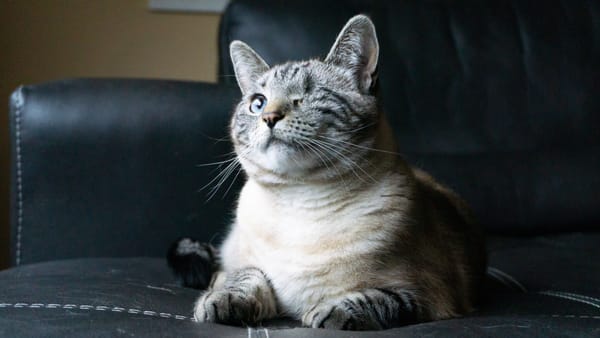
The Persian Cat Is Royalty With a Daily Brushing Bill

The Persian cat walks into a room like it owns the place — mostly because, in its mind, it does. This is the cat that turned long-haired glamour into a lifestyle. Sweet, quiet, and round in every possible direction, the Persian has been the world's favorite couch aristocrat for centuries. If you want a cat that treats your lap like a throne, keep reading.
This article is for awareness only and isn't a substitute for professional veterinary advice. If your cat shows any worrying symptoms, contact your veterinarian promptly.
The Persian Cat Temperament: Calm Royalty
A Persian doesn't do drama. While other cats sprint across the furniture at 3 a.m., the Persian cat is busy being decorative. These cats are calm, gentle, and quiet, voicing their opinions in soft little trills rather than full-volume yowls.
Don't mistake the stillness for distance. Persians bond deeply with their people, just through proximity — claiming the warmest seat in the house, which will always be next to you. They are affectionate on their own terms, and those terms usually involve being stroked while looking extremely unbothered.
They tend to be observers. A new guest enters, the Persian watches from a safe armchair, judges the situation, then resumes napping. Strangers get politeness. Family gets devotion.
Appearance: Built Like a Pillow, Dressed Like a Cloud
Persians are the roundest cats in the building. Round head, round eyes, round body, round little ears tucked into a mountain of fur. Their coat is long, thick, and luxurious — it comes in dozens of colors, from solid white to calico to Himalayan-pointed patterns.
Those big, expressive eyes are one of their trademarks — they give the Persian cat a permanently surprised expression. Combined with a short, snub nose and a sweet, open expression, the face is the whole point of the breed. Which brings us to the great face debate.
Under all that fur sits a medium-sized, cobby cat — heavily boned, with short, thick legs. Most adults weigh around 7 to 13 pounds, and a typical lifespan runs roughly 10 to 13 years.
Modern vs. Doll-Face: What's the Difference?
You'll hear two terms tossed around: modern (or peke-face) and doll-face. Both describe the same breed — the difference is purely in how the face is shaped.
The doll-face Persian is the traditional, original look. The nose sits slightly below the eyes, the muzzle has a little more length, and the face reads as sweet and classic.
The modern (peke-face) Persian has an extremely flat face, the nose pushed back nearly level with the eyes. The name "peke-face" nods to the Pekingese dog, which shares the same flattened profile. Show rings in some regions favor this ultra-flat look; pet owners often prefer the doll-face style.
Neither is "better." Both share the same temperament, the same magnificent coat, and the same talent for looking majestic while doing absolutely nothing. One honest note: "doll-face" is a label, not a health guarantee — judge the actual cat's breathing, eyes and comfort, not the word on the advert.
Coat and Grooming: The Daily Ritual
That coat doesn't maintain itself. A Persian cat's fur mats and tangles fast. Daily brushing with a wide-tooth metal comb keeps the fluff in fluff-worthy condition. Most Persians learn to love it, since it doubles as attention time.
A quick once-over takes five to ten minutes. Work gently through the layers, especially behind the ears, under the front legs, and around the fluffy bloomers. A bath every month or so keeps the coat from getting oily and dull.
Their faces need a daily wipe too — long fur around the eyes and mouth collects crumbs and dust. Keep it to a soft damp cloth. If anything about their coat or skin ever seems off, that's a question for your veterinarian.
The daily face wipe matters for a real reason: in flat-faced Persians the tear ducts are often deformed, so tears cannot drain properly and spill onto the fur, leaving rusty stains. Redness or squinting is a question for your veterinarian.
Two rules save real trouble: comb right down to the skin, because a brush that only skims the surface leaves tangles growing underneath; and never cut a mat out with scissors — the skin beneath is thin and easy to nick, so tight mats belong to a professional groomer or your veterinarian. Combing also pulls loose fur out before the cat swallows it, which helps with hairballs. A quick check of the rear end keeps the long fur there tidy.
Activity and Play: Regal, Not Lazy
Persians have a reputation for being couch potatoes. But they're not decoration-only. A Persian cat enjoys play — it just prefers play on its own schedule. Feather wands, crinkle balls, and a good cardboard box all get royal approval.
Short play sessions a couple of times a day keep them engaged. They're not going to learn parkour like a Bengal or chirp at birds like a Siamese — their play style is more "dignified batting" than "aerial assault." Keep sessions short and gentle, especially in warm weather — flat faces do not handle heat well, and a Persian breathing through its mouth has had enough. If the breathing looks laboured, contact your veterinarian.
They also appreciate vertical space. A sturdy cat tree with a wide perch suits their build. Skip anything wobbly — a Persian expects its furniture to be as stable as its opinions.
Health Awareness: The Flat Face and the Kidneys
The Persian's face is the breed's signature and its biggest trade-off. The extremely flat face can mean narrow nostrils, a long soft palate and crowded teeth — the combination behind brachycephalic obstructive airway syndrome — so some Persians breathe noisily, snore, and tire quickly.
Then there is polycystic kidney disease, or PKD — an inherited condition in which fluid-filled cysts grow in the kidneys. It was found in more than a third of Persian and Exotic cats when screening first became available in the 1990s. A DNA test exists, so anyone buying a kitten should ask the breeder for documented PKD results for the parents. If anything about your Persian's breathing, eyes, appetite, drinking or energy changes, talk to your veterinarian.
What Kind of Owner Suits a Persian?
The ideal Persian person has three things: time, patience, and a strong lint-roller game. If you want a serene companion who will sit beside you while you read, work, or contemplate the universe, the Persian cat is your spirit animal.
They're a great fit for quieter households. Loud, chaotic environments stress them out. They're wonderful with gentle children and calm dogs, and they do fine in apartments. What they do need is you, home and available for company.
First-time cat owners can absolutely do well with a Persian, as long as they go in eyes open about the grooming commitment. The brushing isn't optional. Think of it as a five-minute meditation.
If you are buying a kitten, start grooming while it is still small — short, gentle sessions teach it that combing and face-wiping are ordinary life. Beware of "teacup Persian" adverts: a marketing label, not a recognised variety. Persians also turn up in shelters and breed rescues.
Living With the Fluff: Practical Notes
First: the shedding. That coat goes everywhere. Invest in a good vacuum and accept that your black clothes are now a lifestyle choice. Second: litter. Long fur and litter boxes have a complicated relationship, so a larger box with high sides helps.
Third: Persians and holidays get along beautifully — as long as you manage the chaos for them. They're the type to supervise present-opening from a safe distance — excellent models for a Christmas gift guide for cats photo shoot. Before you decorate, check the Christmas plants to avoid around cats, and keep the human feast well out of paw's reach at the table.
When the party gets loud, give your Persian a quiet room with its bed, water, and litter. The cat Halloween costume safety principles apply year-round here: never force a costume on a cat that clearly objects. If anyone in the house has allergies, know that no cat is truly hypoallergenic — Persians are not a low-allergen breed.
Fun Facts About the Persian Cat
- Ancient aristocracy. Persians are one of the oldest recognized cat breeds, with long-haired cats brought from Persia (modern-day Iran) to Europe in the 1620s.
- World's first cat show star. Persians were among the cats shown at the first organised cat show at London's Crystal Palace in 1871, and the breed was one of the Cat Fanciers' Association's six foundation breeds in 1906.
- The quietest meow in the business. Persians are famously soft-spoken. Some owners report their cat communicates almost entirely through meaningful stares.
- Movie-star looks. White Persians have played pampered pets in countless films.
- Record fluff. A Persian's coat can reach several inches long and comes in an enormous range of colours and patterns.
- Name game. That regal bearing deserves a worthy title. If "Fluffy" feels too on-the-nose, browse some funny cat names for inspiration.
Ever wondered why litters turn up in the colours they do? Our kitten coat colour predictor shows how the main colour genes combine.
Persian Cat vs. Other Gentle Giants
How does the Persian stack up against other beloved breeds? A Ragdoll is similarly sweet and placid but goes limp in your arms like a furry ragdoll (hence the name) — Persians stay composed. A Maine Coon is bigger, bolder, and far more dog-like in its loyalty. The British Shorthair shares the round face and calm nature but with a wash-and-go short coat.
The Persian's unique selling point is the combination: maximum calm, maximum fluff, minimum noise. No other breed delivers quite this level of living-sculpture energy.
Ages can be deceptive in a cat who stays playful for years. The cat age calculator translates your Persian's age into human terms and life stages.
The Bottom Line
The Persian cat is not a pet so much as a lifestyle upgrade. You get a serene, affectionate companion with the most magnificent coat in the cat world — and in return, you commit to daily brushing and accepting that your home now revolves around a small, round monarch.
For the right person — someone home often, fond of quiet evenings, and genuinely willing to wield a comb every single day — there's no better cat. The Persian won't fetch, won't perform, and won't pretend to be impressed by you. But it will sit beside you, purring like a tiny engine, and making your whole house feel a little more royal.
The Persian and the Exotic Shorthair get compared for good reason, and the honest differences live in the details. Line them up in our breed comparison tool before you decide which one fits your home.